AI-Driven Ad Digitization in PDF Newspapers
A system that automatically detects advertisements in PDF editions of newspapers and makes them clickable, allowing readers to instantly visit the advertiser's website by clicking on an ad.
AI system development
2 Full-stack AI Developers
Media holding companies
Ad sales teams
Print-to-digital publisher
Challenge
Many regional publishers in Germany (and across Europe) continue to release newspaper editions in PDF format. While PDFs are convenient for printing and archiving, they are not designed for modern digital media expectations.
The client faced several key challenges:
- Static ads with non-clickable URLs. Advertisements often include web addresses, but readers cannot click them. This reduces ad effectiveness and makes it impossible to track engagement and conversions.
- Manual hyperlinking is time-consuming. Adding links by hand requires significant editorial effort. Newsrooms struggle to keep up with the volume, especially for daily publications.
- Outdated user experience. In digital content, readers expect interactivity by default. Static PDFs no longer meet audience expectations.
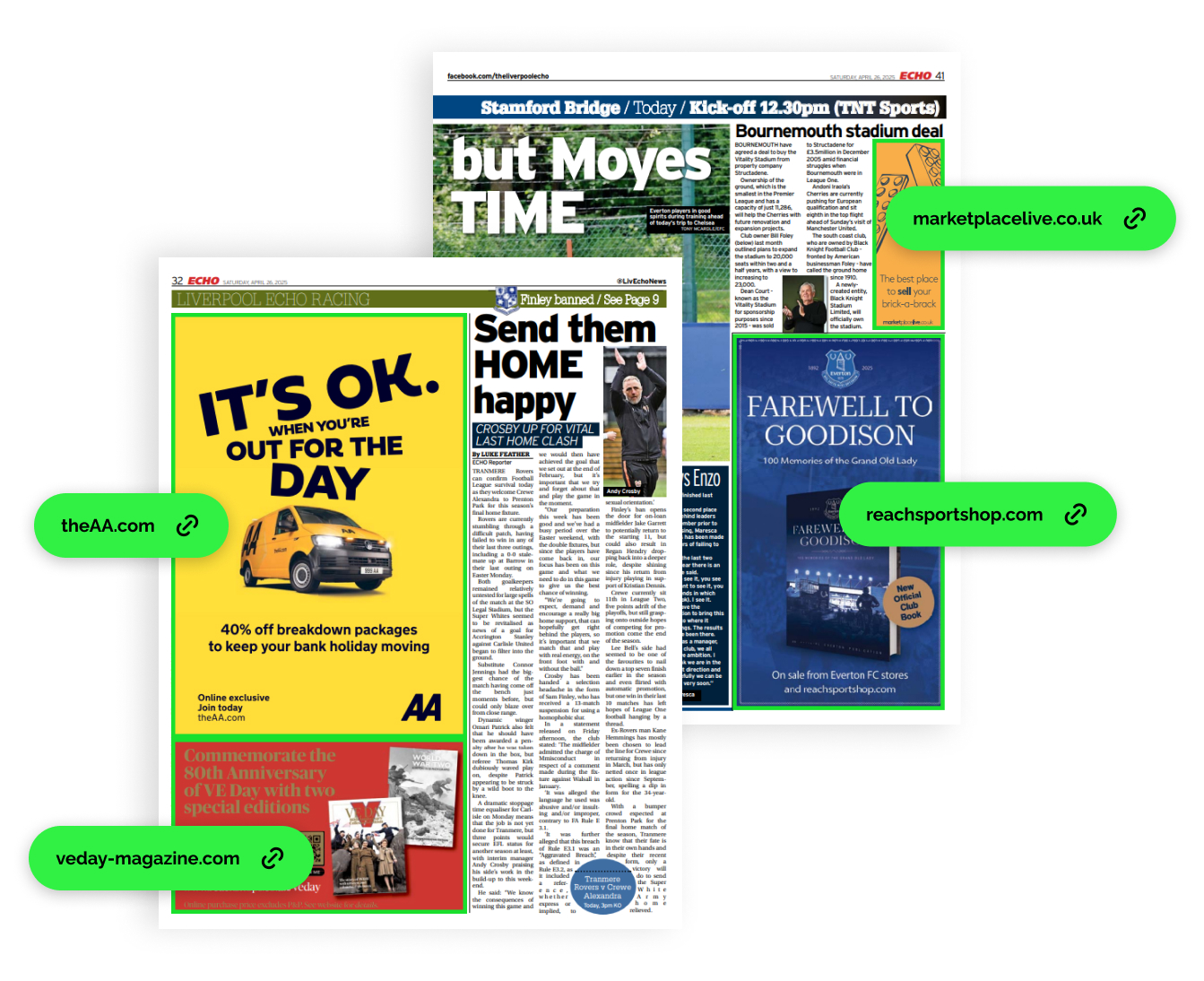
Project goal: automate the processing of PDF newspapers by detecting ad blocks, extracting links, and adding clickable areas directly into the original document. The solution needed to be fast, scalable, and fully autonomous.
Solution
We developed an end-to-end pipeline that transforms static PDFs into interactive documents without human intervention.
File Upload & Storage
Source PDF files are uploaded to cloud storage (AWS S3 or equivalent). Each file receives a unique ID, and processing starts automatically.
Ad Block Detection
Using a YOLO-based computer vision model, the system segments each page and identifies potential advertisement blocks. The model returns bounding box coordinates for each detected ad area.
Link Recognition & Extraction
Each detected block is saved as an image and sent to a multimodal language model (e.g., Gemini or a similar LLM). The model analyzes the content to:
- confirm whether the block is an advertisement,
- extract any URLs,
- return structured data (link, description, confidence score).
Adding Interactivity
The system inserts clickable hyperlinks into the original PDF. Each clickable region precisely matches the coordinates of the detected ad block, preserving the original layout and design.
Output Generation
The final interactive PDF is saved alongside the original file in storage. A processing log is also generated, including:
- number of ads detected,
- number of links added,
- any errors or uncertainties.
Result
The solution automated a labor-intensive workflow and delivered measurable benefits:
- Dramatic time savings: preparation time per issue dropped from several hours to just minutes.
- Higher ad performance: readers can now click ads and immediately visit advertiser websites.
- Improved user experience: PDF newspapers gained interactive functionality similar to modern digital publications.
The system was designed with scalability in mind and is ready for further development, including:
- a web interface and dashboard,
- user accounts and subscription management,
- analytics and administration tools,
- support for additional media formats beyond newspapers.
Contact Us
Let's Work Together!
Do you want to know the total cost of development and realization of the project? Tell us about your requirements, our specialists will contact you as soon as possible.