AI Agent For Loan and Mortgage Applications Processing
October 2025
A hybrid OCR-LLM invoice processing system that integrates Azure Document Intelligence with Gemini 2.5 Pro to deliver confidence-driven extraction, semantic validation, and enterprise-ready structured outputs.
Our client, a cost optimization consulting firm serving over 200 enterprise clients across multiple industries, faced a significant operational bottleneck. Invoice processing was largely manual, slow, and prone to errors, making it difficult to scale operations while maintaining high accuracy in cost analysis.
The firm required a solution that could:
The goal was to drastically reduce processing time while improving accuracy, traceability, and cost discrepancy detection.
We designed and deployed an AI-powered invoice processing platform built on a hybrid OCR and large language model architecture. The system combines enterprise-grade document extraction with advanced semantic reasoning to deliver both visual accuracy and contextual understanding.
This architecture ensures that invoice data is not only extracted correctly but also interpreted, validated, and normalized in a way that aligns with real-world billing logic. This directly addressed the client’s requirement for accuracy, scalability, and audit-ready outputs without increasing operational overhead.
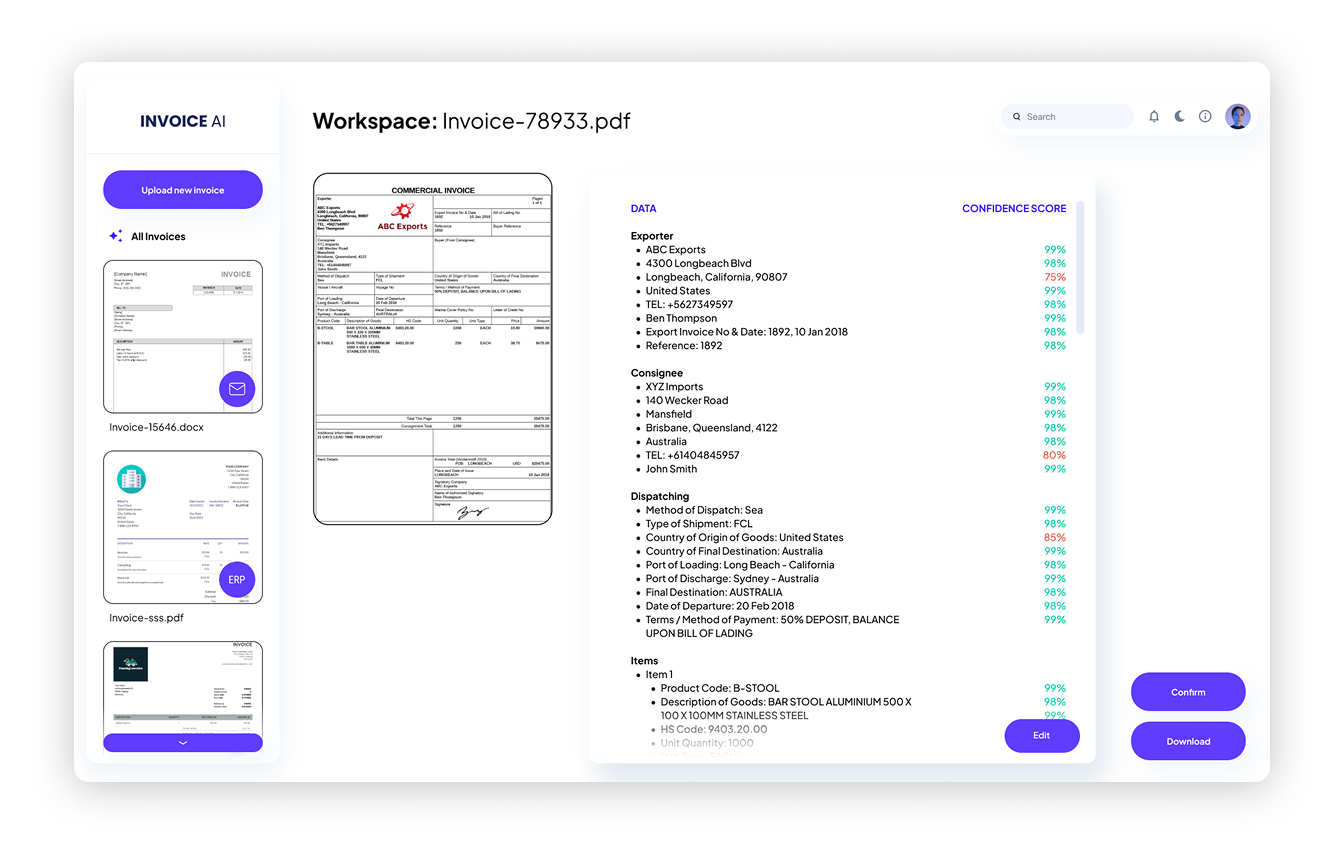
Invoices in multiple formats are ingested into the platform and processed using Azure Document Intelligence. This component serves as the system’s visual foundation, performing high-fidelity OCR and layout analysis across diverse invoice designs.
At this stage, Azure Document Intelligence extracts key data from invoices, such as text, tables, line items, invoice numbers, dates, taxes, and totals, while preserving layout structure and confidence scores required for downstream validation and audits.
While Azure Document Intelligence excels at visual extraction, it does not reason about meaning or intent. To bridge this gap, extracted data is passed to Gemini 2.5 Pro for semantic processing.
Gemini performs contextual validation of invoice structure and billing logic, correction of low-confidence or inconsistent fields, and normalization of extracted data into enterprise-ready schemas.
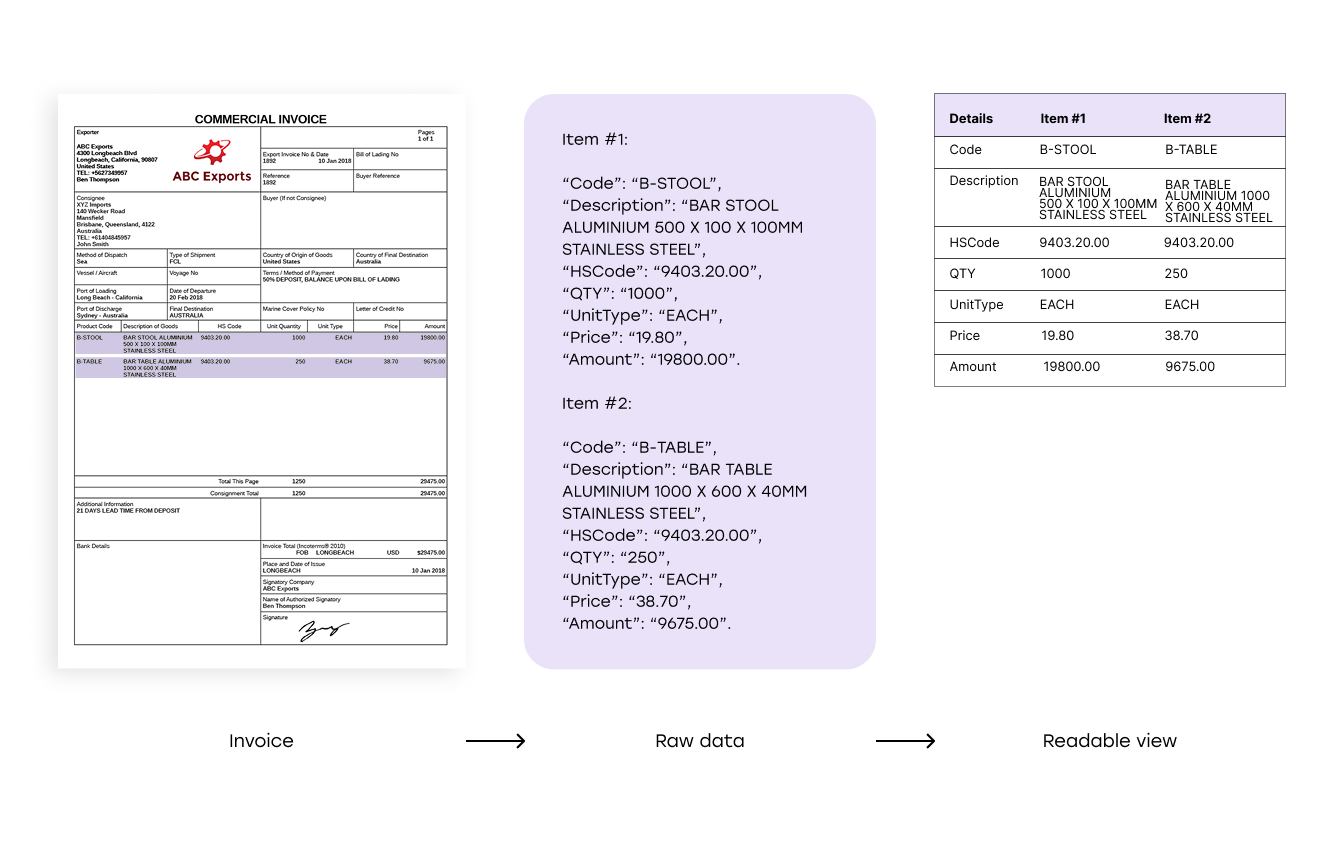
By understanding how invoices “should” behave semantically, the model aligns outputs with human judgment rather than relying solely on rigid rules or templates. This semantic layer significantly reduces manual validation effort by resolving the majority of low-confidence fields automatically.
To further improve reliability and reduce downstream risk, the system applies an ensemble-style validation strategy. Multiple processing outputs are compared using advanced matching techniques, with final values selected through majority agreement and confidence-weighted scoring.
Once validated, invoice data is automatically cross-referenced against predefined controls, including:
The platform dynamically adapts to different invoice layouts, languages, and currencies, making it suitable for global operations. It automatically identifies and flags issues, like duplicate or suspicious invoices, missing or internally inconsistent fields, and charges that fall outside expected pricing or historical thresholds.
All findings are presented in detailed, explainable reports that surface billing errors and cost-saving opportunities, allowing consultants to focus on high-value analysis rather than manual data cleanup.
To ensure enterprise-grade accuracy, transparency, and control, the platform includes a human-in-the-loop validation interface integrated directly into the invoice processing workflow.
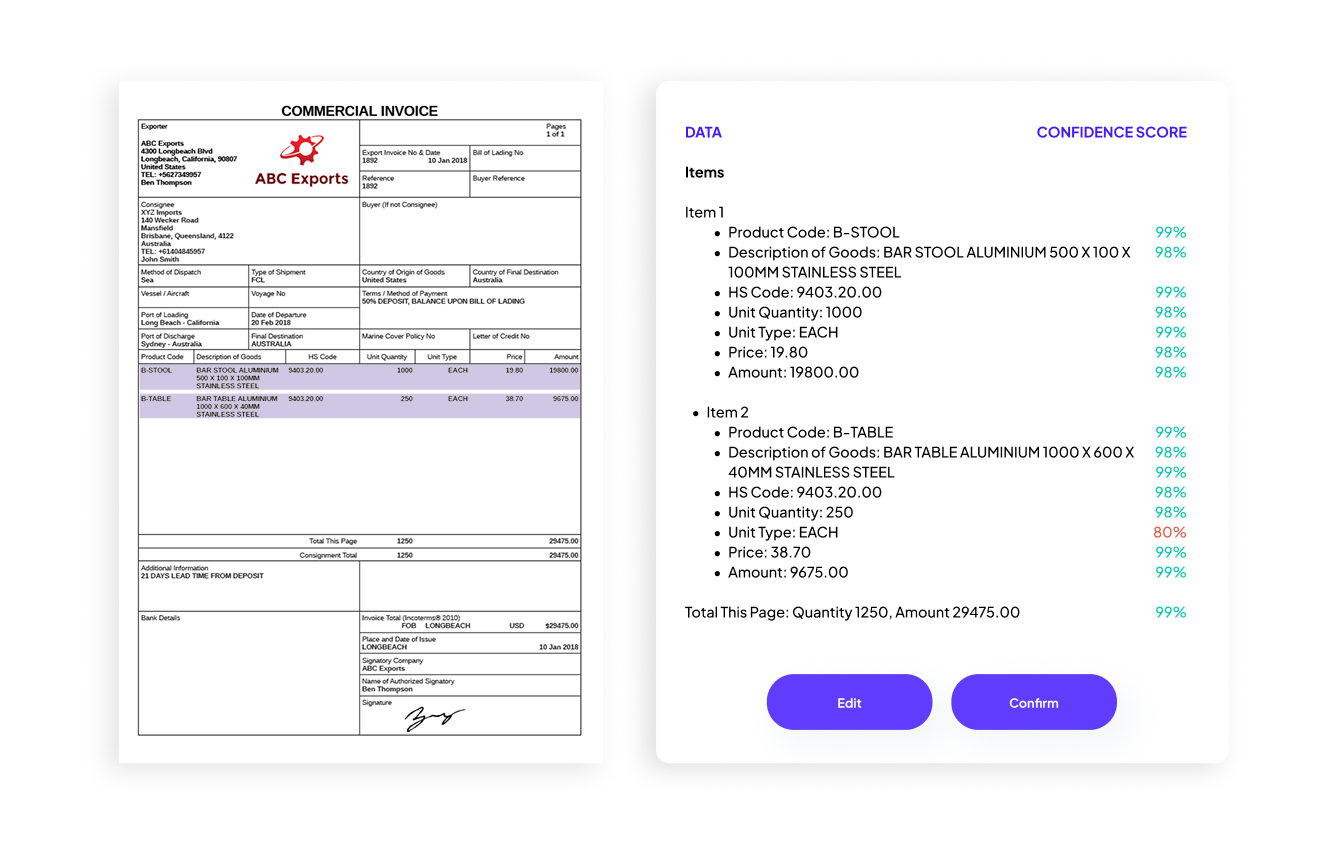
After automated extraction and semantic validation, the system surfaces extracted invoice fields together with model-generated confidence scores and visual references to the original document. Through this interface, reviewers can confirm extracted values as correct, make targeted corrections where necessary, and validate changes with full visibility into document context and confidence indicators.
Extracted and validated invoice data is designed to flow seamlessly into existing enterprise systems rather than remain siloed within the processing platform.
Processed invoices and associated metadata are automatically stored in Microsoft SharePoint, enabling centralized document management, versioning, and access control across client accounts. Structured invoice data is also delivered to downstream ERP systems, in this case Microsoft Dynamics 365, where it is used for accounting, reporting, and cost analysis workflows.
As a result of this hybrid, confidence-driven architecture, the client achieved the following outcomes:
Do you want to know the total cost of development and realization of the project? Tell us about your requirements, our specialists will contact you as soon as possible.